[0–3 YEARS] THE EARLY EXPLORERS: FOUNDATIONS OF GROWTH
At this stage, children build trust, security, and early connections while exploring the world through movement, senses, and relationships. Our focus is on secure attachment, sensory exploration, early communication, and foundational motor development within a responsive and nurturing environment.
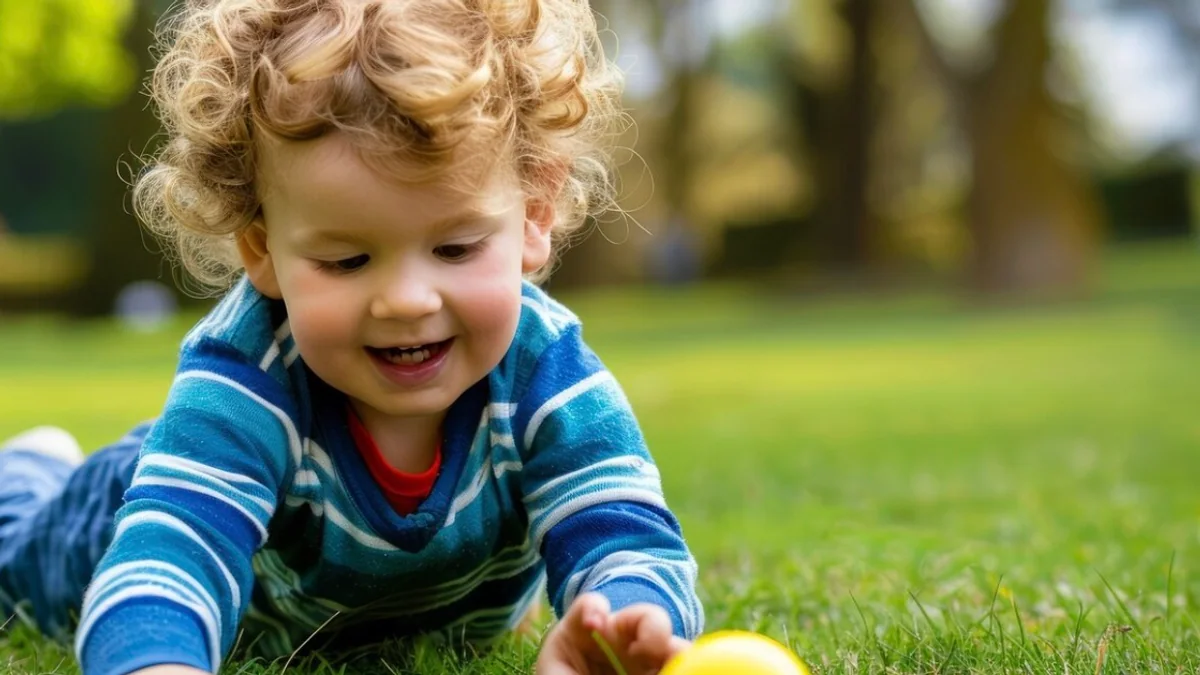
PHYSICAL DEVELOPMENT
Physical development supports the growth of both gross and fine motor skills, helping children gradually build body control, coordination, and confidence.
Through safe, engaging, and play-based experiences, children strengthen their balance, movement, and spatial awareness, forming the foundation for essential everyday life skills.
Examples include:
- Crawling, climbing, and balance activities
- Running, jumping, and movement-based games
- Developing fine motor skills through simple tools
- Participation in indoor and outdoor physical activities
- Exploring body movement, coordination, and spatial relationships

LANGUAGE & LITERACY
We create a rich and supportive language environment that helps children build confidence in both learning and daily life communication. Children are guided to move from single words to simple phrases and increasingly complex expressions, gradually expanding their vocabulary and communication skills.
Through consistent language modeling, meaningful interactions, and purposeful dialogue, educators support the continuous development of children’s language abilities in a natural and engaging way.
By providing a language-rich, interactive environment that encourages two-way communication, children are given opportunities to:
- Participate in conversations with teachers and peers
- Gradually develop expressive and receptive language skills through guided interaction
- Foster an early interest in books, stories, and reading
- Strengthen short-term memory and verbal expression
- Use drawing and mark-making tools to support early communication and expression
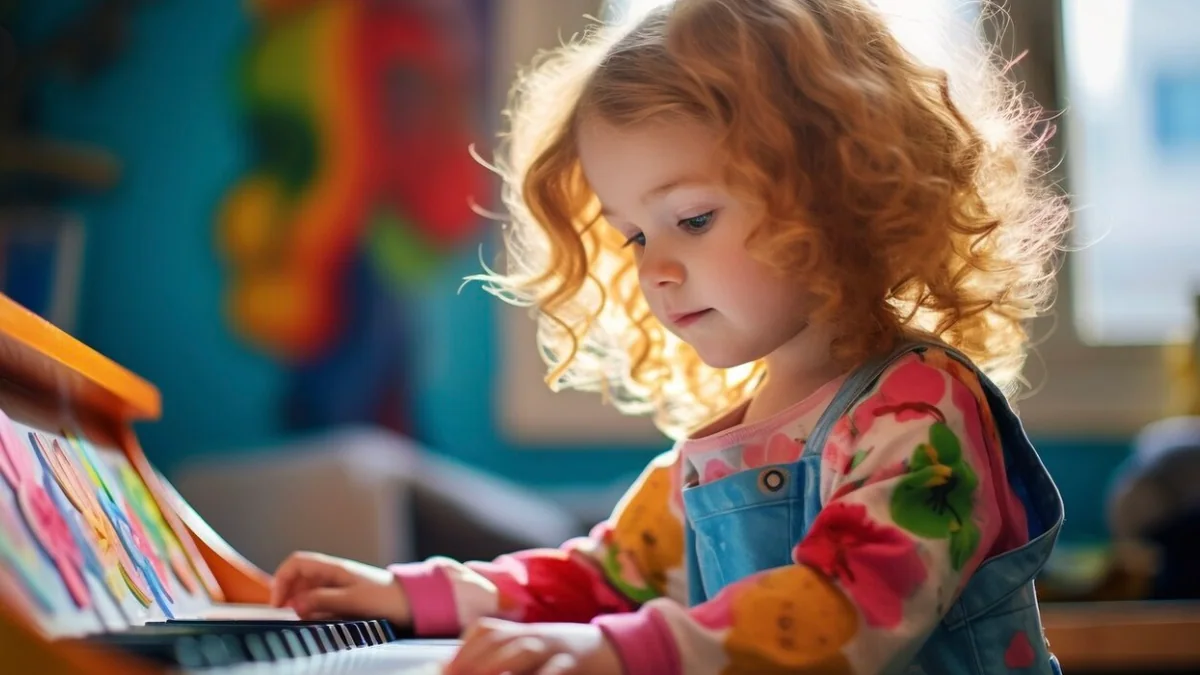
MUSIC & MOVEMENT
In music activities, children develop rhythm awareness, auditory perception, and foundational cognitive skills that support learning across all developmental domains.
Educators encourage exploration and expression through sound and movement, helping children build understanding through musical experiences.
Children will have opportunities to:
- Explore instruments such as shakers, rain sticks, and xylophones
- Engage in scarf dancing and body movement with different types of music
- Participate in rhythm and music games to experience beat and tempo variation
- Express emotions and interact through music
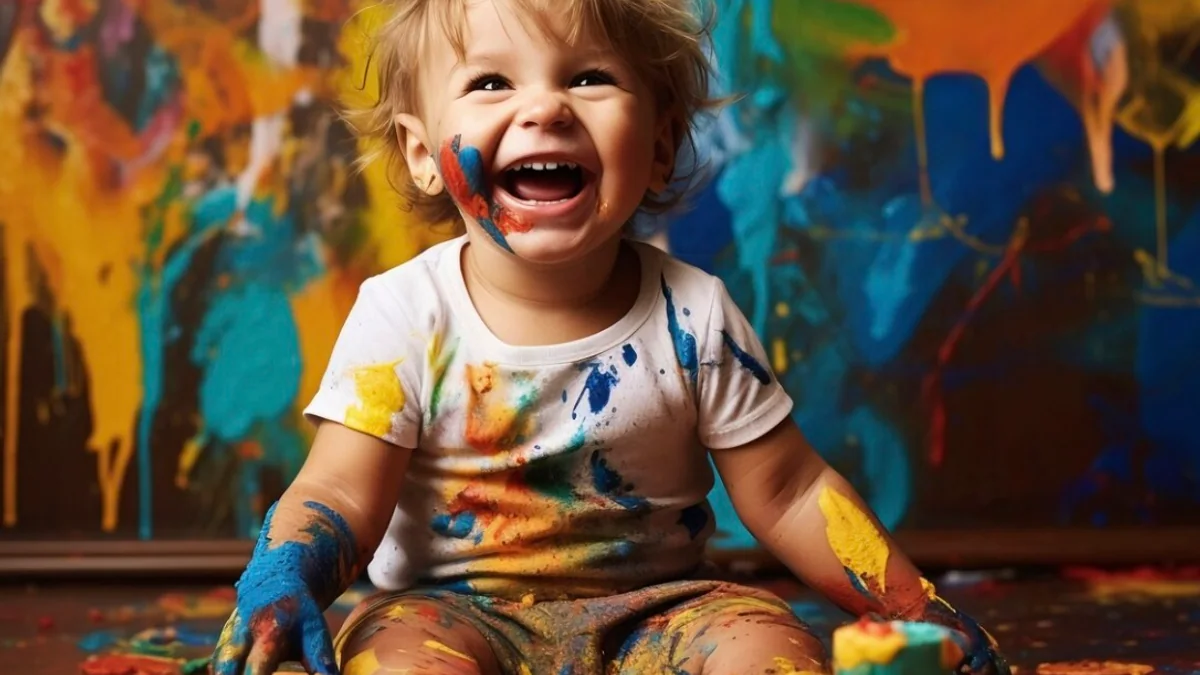
ARTS
Art experiences encourage sensory exploration and hands-on learning, supporting children’s cognitive growth, creativity, and expressive abilities.
Through a variety of materials and guided exploration, children are invited to investigate colour, texture, and form.
Children will have opportunities to:
- Explore sensory materials such as clay and textured mediums
- Engage in drawing, painting, and colour experimentation
- Work with diverse art materials for open-ended creation
- Express themselves freely through artistic activities
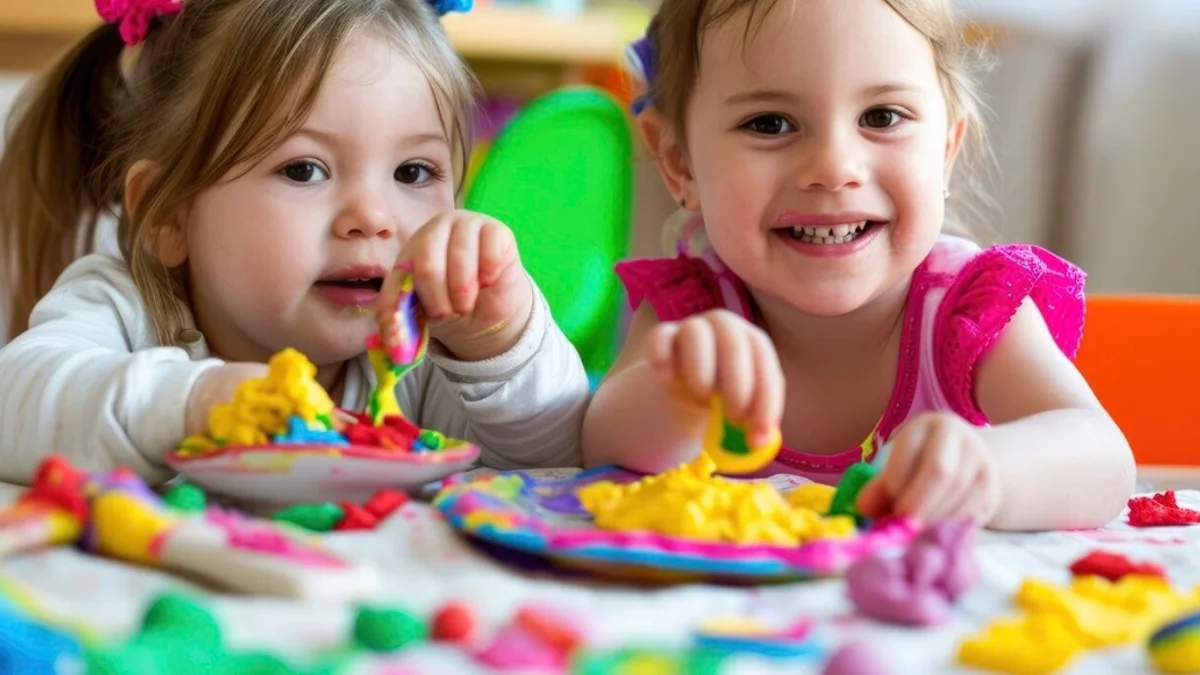
SOCIAL DEVELOPMENT
Everyday experiences—such as caring for plants, viewing family photos, and engaging in inclusive play—help children develop self-awareness, acceptance of others, and a growing sense of responsibility.
Educators support children in reflecting on their behaviour, relationships, and the world around them.
Children will be encouraged to:
- Express their feelings
- Participate in “show and share” activities
- Engage in cooperative play with peers
- Develop empathy and care through books and daily interactions
- Understand the impact of their actions

HEALTH, NUTRITION & SAFETY
A child’s physical well-being is closely connected to their social, emotional, and cognitive development. We are committed to promoting healthy habits that support lifelong well-being.
Our educators help children understand how their bodies work, what they need to stay healthy, and how to care for themselves in safe and responsible ways.
We support children in:
- Developing fine motor skills through drawing, writing, and cutting
- Exploring and connecting with the natural environment
- Identifying healthy foods and participating in gardening activities
- Practising good hygiene habits
[3–5 YEARS] THE CURIOUS LEARNERS: EXPANDING INDEPENDENCE
Children begin to develop stronger independence, social skills, and early problem-solving abilities. Through play-based and inquiry-driven learning, we support language development, early literacy and numeracy, creativity, and cooperative learning in a structured yet flexible environment.
PHYSICAL DEVELOPMENT
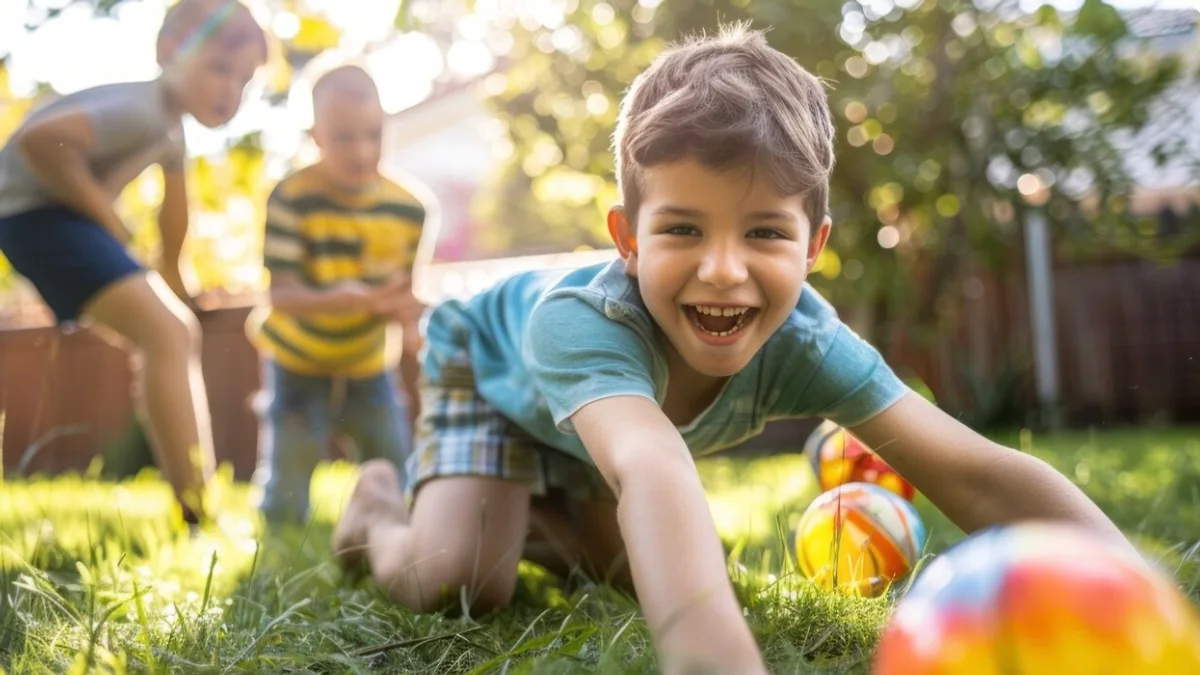
In the 3–5 year stage, physical development shifts from basic movement exploration toward improved coordination, body control, and an emerging understanding of rules and group participation.
Through more structured and progressively challenging physical experiences, children develop balance, reaction skills, and fine motor control, supporting readiness for formal schooling.
Children will have opportunities to:
- Participate in structured group games such as relay races, ball games, and cooperative play
- Develop fine motor skills, including correct pencil grip, cutting more complex shapes, and coordinated hand movements
- Engage in more complex physical challenges such as obstacle courses, climbing, and balance activities
- Participate in rhythm and dance activities to enhance coordination and body control
- Learn to follow rules, take turns, and cooperate within group activities
- Build physical endurance, coordination, and sustained attention through structured movement experiences

LANGUAGE & LITERACY
Language, literacy, and communication are integrated into all aspects of children’s daily learning experiences.
Educators create meaningful learning environments that support children in using and expanding their language, while developing increasingly complex communication skills.
Children are provided with rich opportunities for listening, speaking, early reading, and writing through daily experiences such as:
- Recognizing letters and related words, and responding to open-ended questions
- Engaging in multi-step instructions and activities
- Participating in language and rhyming games
- Listening to and sharing picture books
- Expressing ideas and opinions verbally with educators and peers
- Engaging in early writing and drawing activities such as journaling
MUSIC & MOVEMENT
Music supports children’s development of rhythm awareness, auditory discrimination, and expressive abilities, while also fostering creativity and emotional expression.
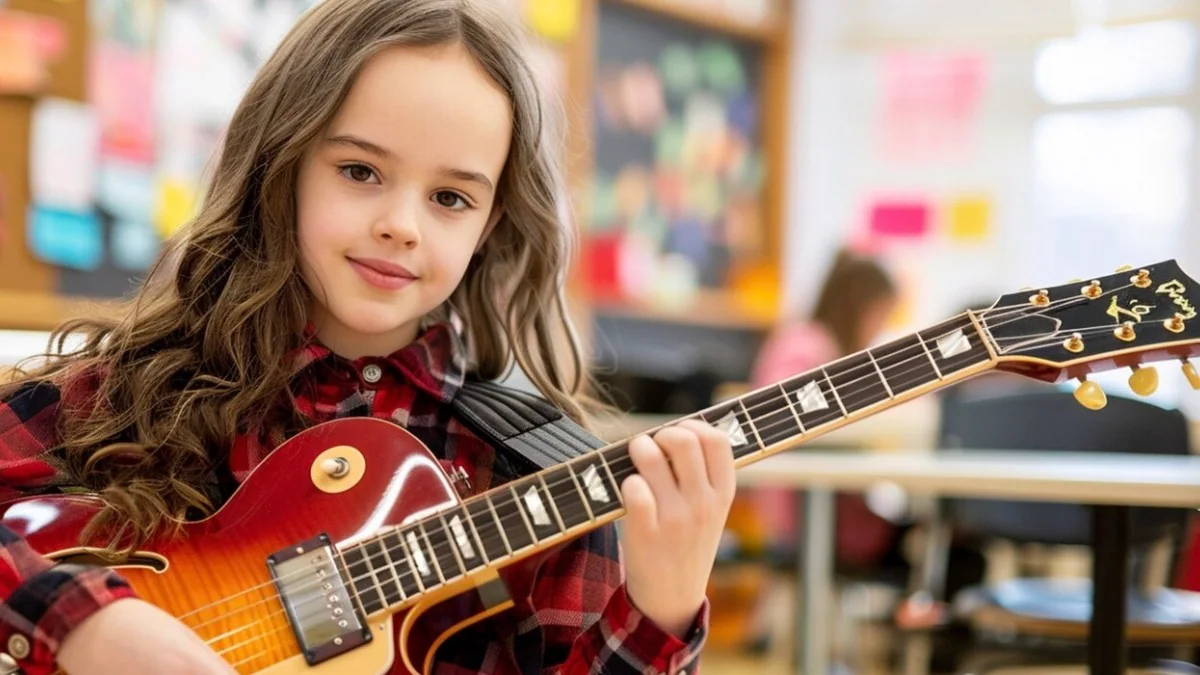
In the 3–5 year stage, children begin to recognize rhythm patterns, participate in more structured musical experiences, and use music as a form of communication and collaboration.
Children will have opportunities to:
- Sing and engage in rhythm exercises to develop pitch awareness and beat recognition
- Explore different musical styles and learn about composers and musicians
- Play instruments in rhythm and group performances
- Participate in music games involving tempo and rhythm changes
- Express movement and ideas through music and group interaction
- Create simple rhythms and perform in small group presentations
CREATIVE ARTS
Creative arts experiences support children in developing imagination, creativity, and problem-solving skills through a variety of artistic media and expressive forms.
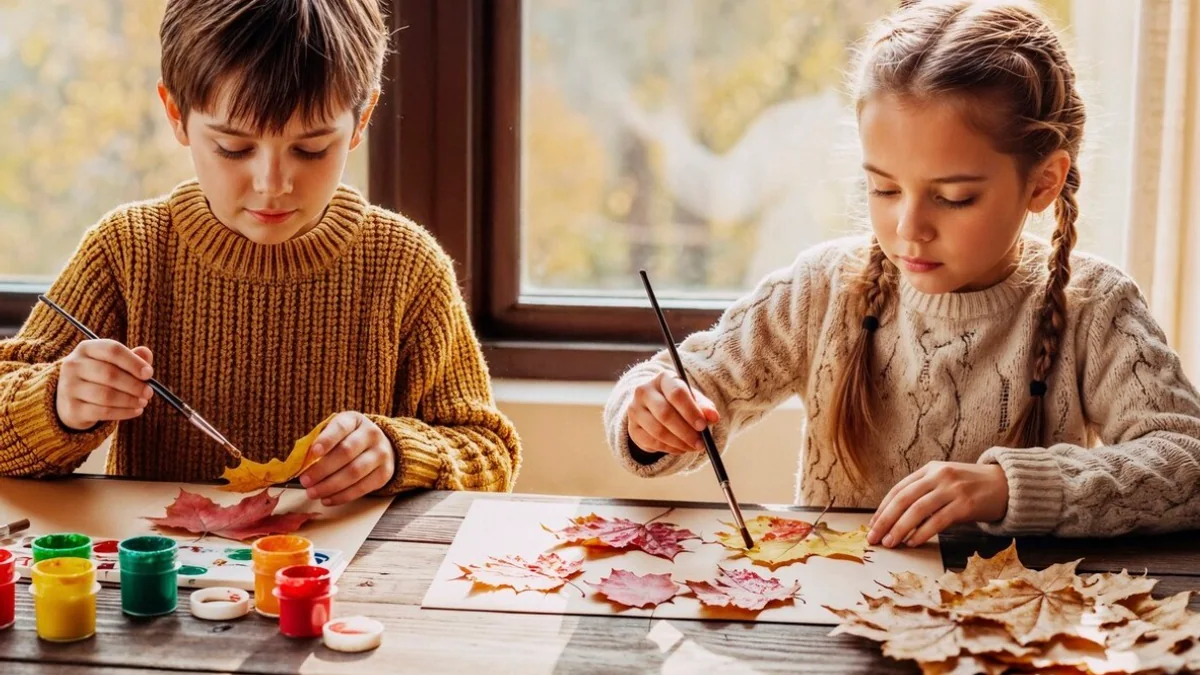
In the 3–5 year stage, children begin to create with intention, express ideas, emotions, and experiences, and develop an understanding of the connection between process and expression.
Educators provide rich, open-ended art environments that encourage exploration, confidence, and sustained engagement.
Children will have opportunities to:
- Engage in extended art projects such as papier-mâché, clay work, and mark-making exploration
- Combine drawing and language to create and share visual stories
- Use diverse materials for creative construction
- Participate in dramatic play environments
- Explore colour mixing, pattern design, and visual composition
- Engage in cross-disciplinary experiences combining art, storytelling, and drama
- Create thematic artwork based on personal experiences
MATHEMATICS, SCIENCE & SOCIAL LEARNING
In the 3–5 year stage, children develop early mathematical thinking, logical reasoning, and an understanding of the natural and social world through hands-on exploration and real-life experiences.
Learning is embedded in meaningful contexts where children investigate concepts such as number, space, time, change, and relationships, while developing communication, cooperation, and responsibility.
Children will have opportunities to:
- Develop mathematical thinking through sorting, classifying, counting, and patterning activities
- Explore measurement, comparison, and quantity in play-based contexts
- Understand time concepts and sequencing in daily routines
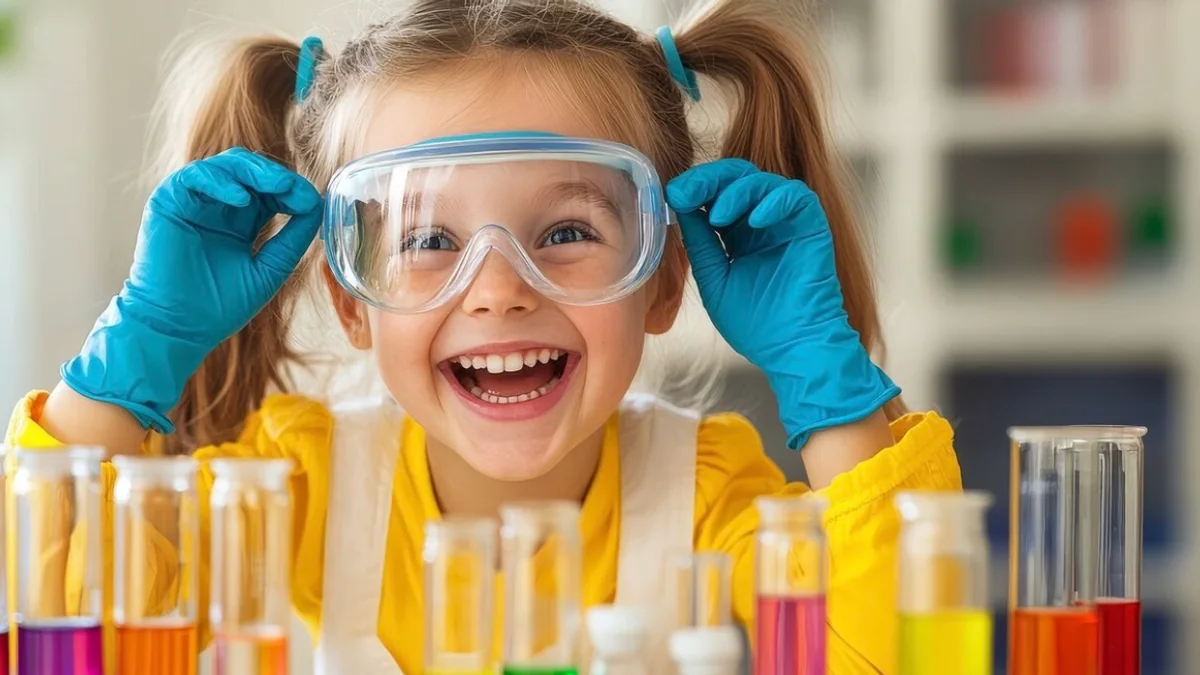
- Investigate weather, natural phenomena, and simple experiments
- Explore spatial awareness through maps, globes, and construction activities
- Understand change and process through cooking, building, and manipulation activities
- Develop communication and teamwork skills through cooperative play
- Build social responsibility through shared experiences such as recycling and environmental care
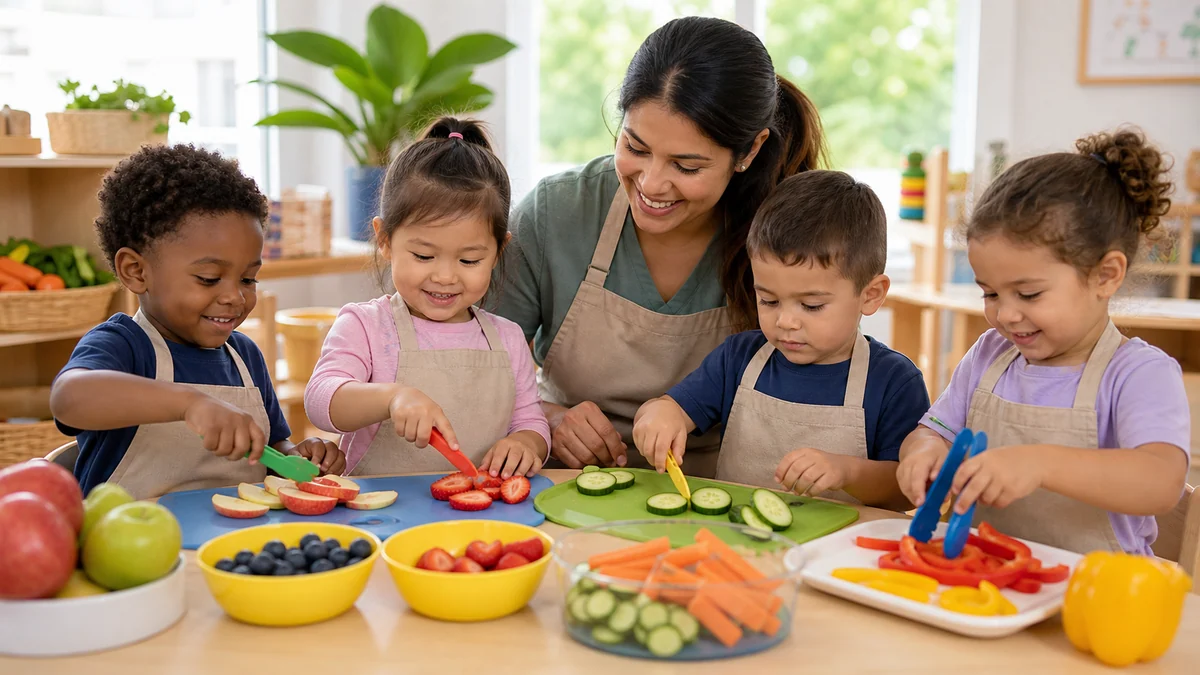
HEALTH, NUTRITION & SAFETY
Children develop foundational life skills that support healthy living, independence, and personal responsibility.
We aim to foster healthy habits in nutrition, physical activity, and safety awareness, enabling children to care for themselves and make informed choices.
Educators provide rich opportunities for children to understand how to maintain health, engage in physical activity, and develop confidence in daily self-care practices.
Children will have opportunities to:
- Participate in simple food preparation such as snacks and meals
- Identify nutritious foods and understand their role in healthy growth
- Develop personal hygiene habits such as proper handwashing and cough etiquette
- Engage in physical activities including jumping, climbing, yoga, soccer, morning exercise, and rhythmic movement
- Participate in safety drills such as fire evacuation practice
- Take part in health and hygiene awareness activities
- Engage in mealtime conversations and social interaction with peers
- Learn to understand, follow, and respect rules for safety and wellbeing
SPECIAL PROGRAMS (COMING SOON)
We are excited to introduce a range of enhanced services designed to support the diverse needs of families and enrich children’s learning and development experiences.
These offerings will include, but are not limited to:
Enrichment programs (e.g., Mathematics, Mandarin Chinese, Taekwondo, Dance, Public Speaking, and more)
After-school care programs
Summer and Winter Camps
Birthday party hosting services
More details will be announced soon—stay tuned!